
STRENGTH THROUGH SUPPORT
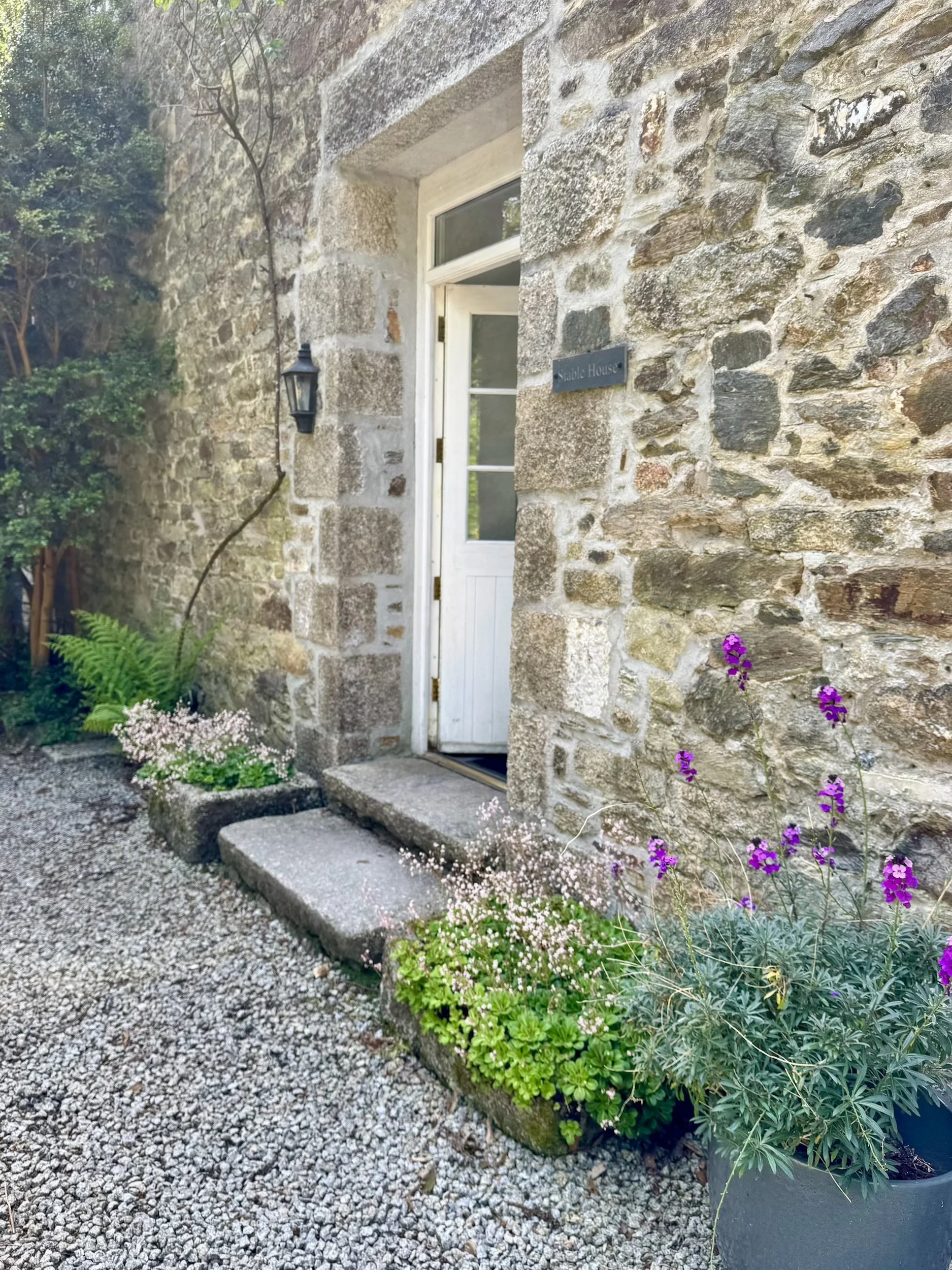
I have just returned from four wonderful days in Cornwall on a yoga retreat, a few days of slowing down, breathing deeply, moving intentionally, and remembering what it feels like to truly support myself.
The days were simple in the best possible way comprising of daily yoga practices, sauna sessions, cold plunges in the sea air, nourishing organic food, early nights, deep conversations, laughter, stillness. Nothing extravagant, and yet somehow everything essential.
What struck me most was how profoundly supported I felt. Physically, mentally and emotionally, held by the rhythm of the days, by nature, by community, by practices that asked nothing of me except presence.
And it made me reflect on something I see so often in yoga classes, and honestly, in life too - our complicated relationship with support.
So many of us have quietly absorbed the idea that needing help is weakness. That “good” yoga means doing the hardest variation. That strength means independence. That resilience means pushing through.
But after these past few days, I keep returning to a different thought.
What if support is not something to outgrow, but something to honour?
In yoga, props are a beautiful example of this.
Blocks, straps, bolsters, blankets, the wall - they are often misunderstood as something we use when we “can’t” do a pose. But the older I get, and the more I practise, the more I see props differently. They aren’t a sign of failure. They are tools of awareness. They create space. They distribute effort wisely. They help us soften unnecessary struggle.
A block beneath the hand in triangle pose doesn’t diminish the pose. Often, it allows the spine to lengthen more freely, the breath to deepen, the body to relax out of gripping and forcing.
A bolster beneath the body in a restorative pose doesn’t mean we’re “giving up.” It allows the nervous system to finally exhale.
Support creates the conditions for openness.
And really, this extends far beyond yoga.
We are constantly being supported, whether we acknowledge it or not. By the ground beneath our feet. By the people who listen to us. By rest. By food. By nature. By community. By moments of stillness. By practices that reconnect us to ourselves.
Nothing in nature thrives alone.
A tree depends on soil, sunlight, water, seasons. The ocean depends on the moon. Even our breath is relational - an ongoing exchange with the world around us.
Yet many of us move through life trying to hold everything by ourselves, believing that asking for help somehow makes us less capable.
What if the opposite is true?
What if there is wisdom in recognising what supports us?
What if strength is not rigidity, but responsiveness?
What if allowing ourselves to be held by people, by practices, by rest, by props, by life itself is actually a form of courage?
This is something I want to explore more deeply in my teaching.
Not yoga as performance, but yoga as relationship.
A practice where we stop fighting for an ideal shape and start listening for what helps us feel steady, spacious, safe, and connected.
In yoga philosophy, there’s a concept of balancing sthira and sukha:
steadiness and ease.
Too much effort without support becomes strain.
Too much softness without structure becomes collapse.
But somewhere in the middle is something beautiful:
supported strength.
Grounded openness.
Ease that doesn’t need to be earned.
That’s what these few days in Cornwall reminded me of.
That caring for ourselves is not indulgent.
That rest is productive in ways our culture often overlooks.
That support is not weakness.
And that sometimes the strongest thing we can do is stop trying to hold ourselves up alone.